

Benefits of Holistic Early Childhood Education for Children

Last Updated: November 14, 2026
Quick Summary
Holistic early childhood education develops the whole child at once, covering cognitive, social, emotional, and physical growth through play. Instead of isolated drilling, it treats curiosity, friendships, body, and self-confidence as connected parts of learning. Children who feel safe and understood are better prepared for later academics.
Growth in each domain supports the others, so social and emotional skills strengthen academic learning.
Play is the primary vehicle for learning, and children choose activities, experiment, and try again.
Preschoolers build phonological awareness and spatial reasoning through storytelling, rhyming, and block building.
Parents should ask for a sample daily schedule and an example progress note when evaluating a program.
Shy or clingy children often do well with predictable routines and time to warm up.
Table of Contents
What Holistic Early Childhood Education Means
Holistic early childhood education is an approach that develops the whole child: cognitive, social, emotional, and physical growth, all at once. Instead of drilling letters and numbers in isolation, it treats a three-year-old's curiosity, friendships, body, and sense of self as parts of the same learning process.
At Kids Zone Academy, we build our preschool program on this idea.
The contrast with traditional models is worth understanding. Traditional early programs often focus on academic readiness first and treat social or emotional skills as a side effect. Holistic programs reverse that order. They assume that a child who feels safe, confident, and understood is better prepared to learn letters, numbers, and everything after.
Several core strengths set holistic programs apart:
Whole-child focus: Growth in each domain supports the others.
Child-centered learning: Activities follow children's interests and developmental needs.
Play-based methods: Play is the primary vehicle for learning, not a break from it.
Family partnership: Parents and teachers share observations and goals.
Cognitive and Academic Growth Through Everyday Learning
Cognitive development in holistic programs rarely looks like worksheets. It looks like a toddler stacking rings in size order, a three-year-old narrating a pretend grocery trip, and a four-year-old revising a block ramp until the car rolls all the way down. Each of those moments is building the same underlying skills that later show up as reading, math, and reasoning.
Here is how the domains connect in practice, by age:
Infants and young toddlers: Cause-and-effect play (dropping a spoon, pressing a button that plays music) and back-and-forth babbling build attention, memory, and early language. Teachers narrate routines, "Now we're washing your hands, one, two", to layer vocabulary onto everyday care.
Toddlers (roughly 2-3): Sorting by color or size, counting snack pieces, and simple matching games build one-to-one correspondence and classification. Adults extend play with open questions ("What happens if we add one more?") rather than quizzing.
Preschoolers (roughly 3-5): Storytelling, rhyming, and drawing-then-dictating a caption support phonological awareness and print concepts. Block building, sand and water measurement, and board games with rules build spatial reasoning, sequencing, and persistence.
Critical thinking gets daily practice. When a group tries to build a bridge that holds a toy car, they test an idea, notice the sag, add supports, and try again. That hypothesis-revise cycle is the foundation of later academic reasoning, and it is more valuable than a correct answer memorized once.
Parents often ask how this connects to kindergarten readiness. Most early childhood practitioners point to a cluster of skills rather than a single score: understanding and following two-step directions, using words to ask for help, recognizing some letters and their sounds, counting objects to about 10, and sticking with a task for several minutes. Exact outcomes depend on the child and the program, so treat any promise of a specific academic result with caution.
Watch out: a program that advertises "kindergarten readiness" but cannot describe what children actually do during the day, or how teachers observe and share progress, is offering a label, not a method. Ask to see the daily schedule and a sample of how progress is documented.
The table below summarises how these skills develop across the main age groups.
Age group | Typical activities | Skills built |
Infants and young toddlers | Cause-and-effect play, back-and-forth babbling | Attention, memory, early language |
Toddlers (roughly 2-3) | Sorting by color or size, counting snack pieces | One-to-one correspondence, classification |
Preschoolers (roughly 3-5) | Storytelling, rhyming, block building | Phonological awareness, spatial reasoning, persistence |
Social Skills, Emotional Intelligence and Self-Regulation
Social development is where holistic programs often show the clearest results. Children learn to take turns, share materials, resolve disagreements, and read other children's emotions. Learn which activities build sharing, empathy and cooperation, plus how to teach them at home or in class. These are skills that take practice, and preschool gives them daily opportunities.
Emotional intelligence grows the same way. A teacher who names feelings ("You look frustrated that the tower fell") helps children build vocabulary for their own emotions. Over time, children begin to use that language themselves instead of crying or grabbing a toy.
Self-regulation is the quieter skill underneath it all. Children who can wait their turn, calm down after excitement, or transition between activities tend to handle the rest of the school day more easily.
Physical Development, Independence and Confidence
Physical development in early childhood includes both gross motor skills, like running, climbing, and balancing, and fine motor skills, like holding a pencil, buttoning a coat, or cutting with scissors. Holistic programs build both through daily movement and hands-on tasks.
Independence matters just as much. Children who pour their own water, put away their shoes, or choose an activity gain a sense of competence. That confidence carries into new situations, including the first days of kindergarten.
Parents often ask whether this kind of program suits shy or clingy children. Many do well when teachers give them predictable routines and time to warm up. Growth is gradual, and every child moves at a different pace.
Holistic Early Childhood Education Activities in Practice
Concrete activities make the approach easier to picture. Here are examples a family can try at home or look for in a classroom: Preschool activities for problem solving at home and in class offer more practical ideas to try.

Cooking together: Measuring ingredients builds math vocabulary and following steps builds sequencing skills.
Nature walks: Collecting leaves and sorting them by color or size supports observation and classification.
Dramatic play: Setting up a pretend doctor's office builds language, empathy, and role-taking.
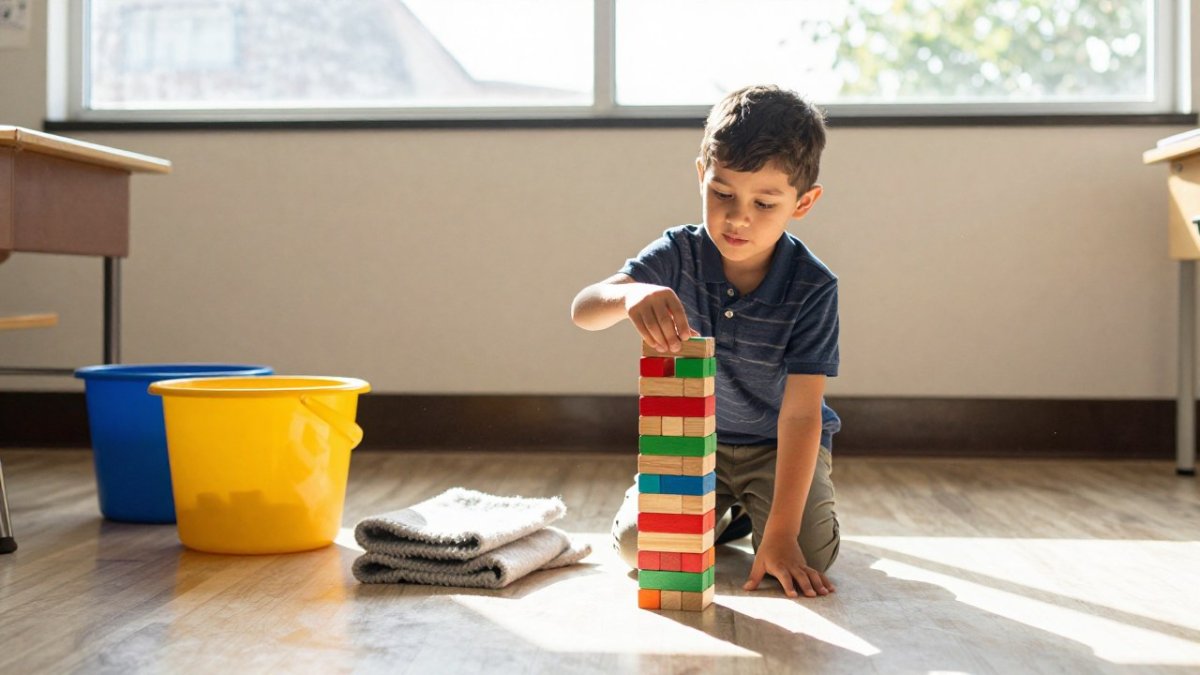
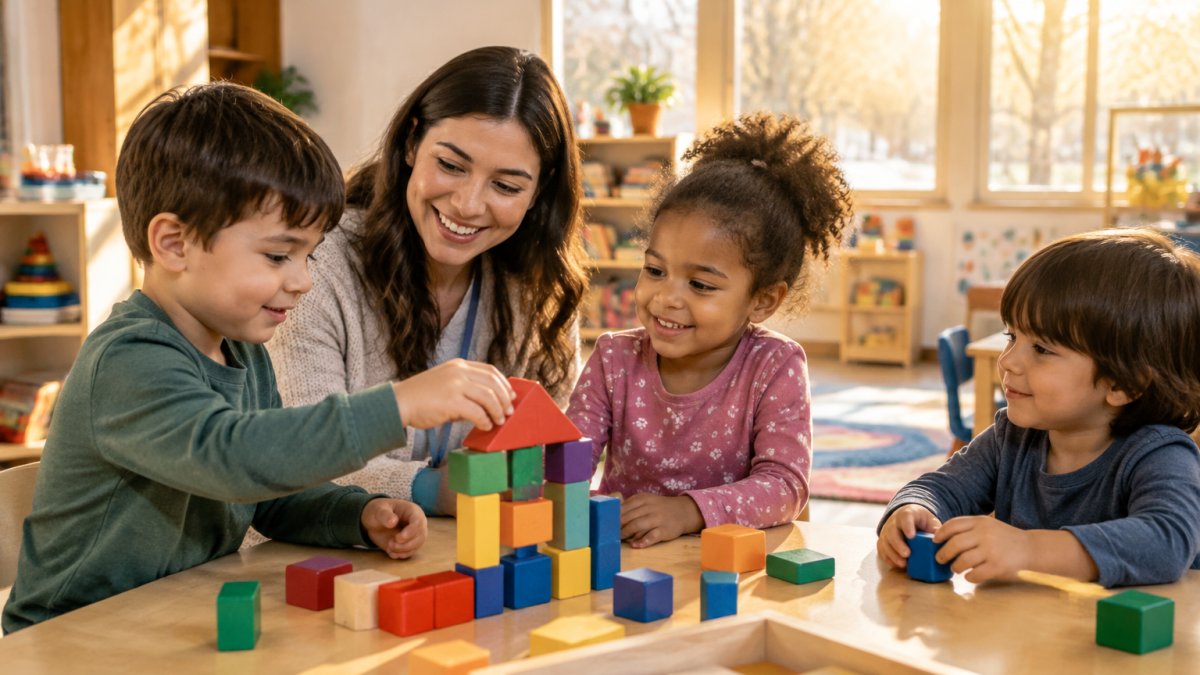
Building projects: Designing a block structure teaches planning, balance, and persistence.
Why Play-Based Learning Benefits Holistic Development
Play-based learning is the engine of holistic education. Children choose activities, experiment, make mistakes, and try again, which builds intrinsic motivation. A child who discovers a solution on their own remembers it far better than one who was told the answer.
Play also supports social and emotional learning. Pretend games require negotiation, shared rules, and perspective-taking. Those are the same skills that make classroom life run smoothly.
The key is intentional play. Teachers set up the environment, ask open questions, and observe children closely, then step in when a child needs support. Play looks spontaneous, but in a well-run program it is carefully planned.
Choosing a Holistic Preschool in St. Petersburg and Booking a Visit
Families in St. Petersburg, Florida have several early childhood options, and the differences that matter most are rarely visible on a website. A useful visit is an evaluation, not a tour. Bring a short list of questions and watch how teachers actually interact with children.
Questions worth asking any program:
Curriculum and play: How much of the day is child-directed play, and how do teachers extend it? Ask for a sample daily schedule, not a brochure description.
Teacher-child interactions: What is the adult-to-child ratio, and how are teachers trained in responding to frustration, conflict, and big feelings?
Observation and communication: How do teachers document progress, and how often do families hear about it? Ask to see an example of a progress note.
Inclusion and individual differences: How does the program support children with disabilities, neurodiversity, language differences, or varied developmental timelines? Ask whether staff have access to additional support services.
Family partnership: How are caregivers' observations gathered, and how are routines reinforced between home and school?
During the visit, watch for concrete signals. Do teachers get down to children's eye level? Do they narrate what children are doing rather than redirect constantly? Is there a predictable rhythm to the day, and are outdoor spaces used regularly? In St. Petersburg's climate, ask how outdoor time is handled during hot or rainy months, shade, water, and indoor movement alternatives all matter.
Cost matters too. At Kids Zone Academy, weekly rates start at $200 per week, and we are happy to walk you through what that covers. Pricing can vary by schedule, so the most accurate answer comes from asking directly.
Our center is at 4500 38th Avenue North in St. Petersburg, Florida 33713, and families are welcome to visit during business hours. Bring your questions, and we will show you a classroom, explain our daily routine, and talk through whether our approach fits your child, including how we would support any specific developmental or language needs your family is navigating.
Holistic education works best when families and teachers share the same goals. If you want a preschool that nurtures the whole child, we invite you to come see it in action.
Frequently Asked Questions
Why is holistic development important in early childhood education?
Young children learn through connected experiences rather than isolated subjects. Holistic early childhood education addresses physical, emotional, social and cognitive growth together, so a child who learns to share during block play is also practicing language, math reasoning and self-control. Programs that focus only on academic drills can miss the social and emotional skills children need to settle into kindergarten. A balanced approach helps children adapt to new settings, communicate their needs and stay curious about learning over time.
What does holistic mean in childcare?
In childcare, holistic means caring for the whole child rather than one skill area. Caregivers plan activities that support physical health, emotional well-being, language, social interaction and thinking skills at the same time. Routines such as meals, outdoor play and group time are treated as learning opportunities. Families evaluating a program can ask how staff track each domain of development and how they communicate progress to parents.
How does play-based learning support holistic development?
Play-based learning lets children practice several skills at once. Pretend play builds language and perspective-taking, building projects develop problem-solving and fine motor control, and cooperative games teach turn-taking and negotiation. Because children choose and direct much of their play, they stay engaged and build self-motivation. Teachers can observe these interactions and gently extend them with questions and new materials that match each child's interests and developmental needs.
What is the primary goal of holistic education?
The primary goal of holistic education is to develop the whole child so that they can think critically, relate well to others, manage their emotions and take on new challenges with confidence. At Kids Zone Academy in St. Petersburg, that goal is pursued through hands-on, age-appropriate activities and instruction in Spanish alongside physical, emotional and educational growth. Parents considering any program can ask how it measures progress across these areas. For current tuition and enrollment details, contact the school directly or visit its website.
Comments